Andrea Byrnes

Papyrus Salt 124, BM 10055. Copyright of the British Museum, London.

Paneb – “The All Round Bad Guy”

In Joyce Tyldesley’s Judgment of the Pharaohs, Tyldesley makes several references to an individual at Deir el-Medineh named Paneb, whom she describes evocatively as “the all round bad guy” (2000, p.127). In this short article, I have brought together some of the misdemeanours outlined in a letter known as Papyrus Salt 124 (BM 10055) for a closer look at this colourful character.  [more…]

Edition - December, 2011

The contributions of A.J. Arkell to eastern Saharan prehistory

The contributions of A.J. Arkell to eastern Saharan prehistory

Abstract

Anthony John Arkell (1898 – 1979) was a pioneer of Sudanese archaeology, a precise and conscientious surveyor and excavator whose publications are still invaluable today. His work provided the framework within which conversations about the prehistory of the Sudan are discussed. When he returned to live and work in England Arkell was responsible for restoring the collections of the Petrie Museum of Egyptian Archaeology, its contents having been packed into 800 boxes during the Second World War. He went on to research and write about the Egyptian Predynastic, helping to revive interest in the pre-Pharaonic period. Anthony Arkell’s contribution to the archaeology of the Eastern Sahara is explored with reference to both his own publications and to comments made by other researchers about the range and value of his work. [more…]

Gifts of the Nile

Book Review: Gifts of the Nile – Ancient Egyptian Faience (Florence Dunn Friedman)

Faience was celebrated in the exhibition “Gifts of the Nile, ” which was organized by The Museum of Art, Rhode Island School of Design in Cleveland (U.S.), where it opened in 1998 before it then travelled to the Kimbell Art Museum, Fort Worth in Texas (U.S.). Published to accompany the exhibition, the book Gifts of the Nile brings together academic insights, an exhibition catalogue, and colour plates.  [more…]

Speos Artemidos, Rock temple of Pakhet. Photo by Einsamer Schütze, 2006

Notes on the Goddess Pakhet

In her article on Hatshepsut in the December 2011 edition of the Magazine, Barbara O’Neill mentions the deity Pakhet. The following introduces what little is known about this elusive deity. Pakhet was represented in the form of a woman with a lion’s head (figure 1- click to see the bigger image). She looks very like leonine representations of Sekhmet and Bastet and was often associated with them.  [more…]

Early Predynastic objects at the Ashmolean


  The Ashmolean Museum in Oxford (UK) has an excellent collection of Predynastic items. These photographs were taken before the refurbishment of the Egyptian collections, which will be opening next month, and represent a tiny proportion of the Predynastic items that were on display.   It always impressed me that the Ashmolean was willing to display  [more…]

The Tomb-Chapel of Nebamun by Andrea Byrnes


The Nebamun gallery at the British Museum re-opened in 2009 after an extensive project of restoration.  The exhibit consists of a number of scenes from an Eighteenth Dynasty tomb-chapel in the Luxor area, the location now lost, purchased by the British Museum in the 1820s.   Other smaller scenes were purchased by other museums.  The painting  [more…]

Edition - September, 2011

AWT Conference 2011 Review: House and Home at el-Amarna by Kate Spence

Review by Andrea Byrnes.  Published on Egyptological, Magazine Reviews, 29th September 2011. AWT Conference 2011.  House and Home at el-Amarna: some thoughts on domestic architecture by Dr Kate Spence   Introduction Dr Kate Spence of the University of Cambridge introduced the audience to an area of the city of Amarna which formed an equivalent of  [more…]

Plan of the church in the tomb of Panehsy

AWT Conference 2011 Review: Christianity on the Edge by Gillian Pyke

Review by Andrea Byrnes and Kate Phizackerley.  Published on Egyptological, Magazine Reviews, 29th September 2011.   AWT Conference 2011 – Christianity on the Edge:  The North Tombs Settlement at Amarna. By Gillian Pyke.   Introduction Gillian Pyke was the only speaker at the 2011AWT Conference to discuss aspects of Amarna which date to outside the  [more…]

Some of the Conference Audience Relaxing

AWT Conference 2011 (Amarna) – Overview

The 2011 Ancient World Tours Conference was held at UCL, London over the weekend of 3rd and 4th September and focused on Amarna. The authors attended and offer this overview of the conference. Over the next ten days or so, we shall also be publishing detailed reviews of about half of the sessions in the Magazine section of Egyptological (and will formally become part of the next edition).  [more…]

Tutankhamun pectoral.  Photograph by Jon Bodsworth

Libyan Desert Glass and the Breast Ornament of Tutankhamen

One of the many fabulous items in the jewellery collection from the tomb of Tutankhamen is a breast ornament. A highly decorative piece in the form of a winged scarab, dating to around 1330 BCE, it is currently on display in the Egyptian Museum in Cairo (JE 61884; Burton Photo No. P1133; Carter No. 267d). Adorned with silver, semi-precious stones and glass paste, all set into gold, the eye-catching centrepiece is a semi-translucent green scarab. Remarkable for its beauty, the pectoral has the added interest of scientific and archaeological mysteries that have yet to be completely unraveled. [more…]

The Lost Tombs of Saqqara by Alain Zivie

Book Review: The Lost Tombs of Saqqara

Consisting of eight chapters, the main attraction of The Lost Tombs of Saqqara is the exceptional beauty of the photographs. For those unfamiliar with the site, Saqqara is a vast, sprawling necropolis to the south of Cairo. It was used from the Early Dynastic period onwards for royal and elite burials, and is best known for the Step Pyramid of Djoser, Egypt’s earliest pyramid, and its other Old Kingdom pyramids and beautifully decorated mastaba tombs. This book takes the reader into the New Kingdom area of Saqqara. [more…]

Front cover

Book Review: History of Ancient Egypt: Neolithic Period ot the Early Dynastic Period including Menes, Narmer, Hieroglyphs, Thinis and More.

By Andrea Byrnes.  Published on Egyptological, 9th September 2011   History of Ancient Egypt: Neolithic Period ot the Early Dynastic Period including Menes, Narmer, Hieroglyphs, Thinis and More. Edited by Grace Windsor ISBN 9-781241314675   This is a self-published book, one in a series about Ancient Egypt, widely available on online book stores.  Before I  [more…]

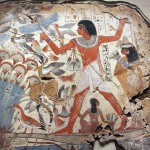
Figure 3. Banquet Scene, Tomb of Nebamun. Photograph courtesy of the British Museum

Egyptological Magazine – Edition 2

Welcome to the Second Edition of the Egyptological Magazine
In the Magazine we are pleased to see the return of two authors from the first edition. Brian Alm is continuing his popular series on the religion of the ancient Egyptians while Barbara O’Neill returns with another lavishly illustrated article. The image alongside, from the tomb of Nebamun is just one of the images in her article on the depiction of animal companions in tombs. We are delighted to welcome two new authors. Philip A. Femano has written a must-read article questioning the purpose of the blocking stones in the Ascending Passage of the Great Pyramid. Gary Beuk presents a biography of one of the best known early Egyptologists, and certainly the most colourful, Gionanni Battista Belzoni. Andrea Byrnes has added an article on the little known subject of Libyan Desert glass, a real treat for any Tutankhamun fans who have not heard of this unusual material found amongst his jewelery. We hope you will show your appreciation for all of our writers by leaving comments on their pieces. Our plan is for the Magazine to feature reviews as well as articles and you will find three of those as well, written by us. We attended the AWT conference last weekend and offer an overview and the first of our detailed reviews of invidual lectures. More will follow over the next few weeks.  [more…]

Notes on the Osireion at Abydos

Notes on the Osireion at Abydos

The Osireion was first excavated by Sir William Flinders Petrie, Margaret Murray and Petrie’s wife in the early 1900s. They found the tunnel and excavated towards what they called the “hypogeum.” It was full of sand and Roman filling when they began to clear it. Even before the full excavation of the site Murray speculated, convincingly, that “this was the building for the special worship of Osiris and the celebration of the Mysteries” [more…]

A few thoughts about duality and the desert

A few thoughts about duality and the desert

Brian Alm’s excellent introductory article on ancient Egyptian religion in Edition 1 of Egyptological, the first in a series of five articles on the topic, includes a section on duality. I have often pondered the extent to which the Egyptians segregated religious belief, which potentially formed an explanatory but idealized model of life, from everyday pragmatism. Duality is a good case in point.  [more…]

Edition - June, 2011

Bloggers, Antiquities and Egypt’s Revolution

Bloggers, Antiquities and Egypt’s Revolution

In the last week of March 2011 an UNESCO team visited Egypt to meet with the new Minister of Culture and try to understand the state of the country’s antiquities following widespread reports of vandalism, theft and looting. Egypt has seven World Heritage Sites: six cultural heritage sites and the fossilized mangroves of the Faiyum’s Whale Valley.  [more…]

Satelite photograph of Egypt

Television Review: Egypt’s Lost Cities

“Space Archaeology” is the new buzzword adopted by the BBC in its documentary “Egypt’s Lost Cities.” Not to be confused with the branch of archaeology studying orbiting space debris, it describes instead the use of satellite images to locate archaeological remains beneath the earth’s surface. [more…]

Pigs in Ancient Egypt – Photographs

Does anyone have any photographs of pigs in AE contexts that they would be willing for me to use?  I want to write an article on the subject of how pigs were used in the Egyptian agricultural mix, and need photographs to illustrate the article which may appear online.  You would need to own the  [more…]

Description of Egypt

Book Review: Description de l’Egypte (Taschen 25th Anniversary Series)

Description de l’Egypte, Gilles Neret, Taschen 25th Anniversary Series (paperback edition), 2007. If you are interested in the images contained in Description de l’Egypte, the book produced by Napoleon’s “savants”, and particularly the illustrations of Pharaonic Egypt, this is a very good place to start. If you want an in-depth analysis of the background to Description, its purpose and a good sample of all the original sections and topics then you may be disappointed. [more…]

Book Review: The Ancient Egyptian Books of the Afterlife

Book Review: The Ancient Egyptian Books of the Afterlife

The Ancient Egyptian Books of the Afterlife by Erik Hornung (Translated by David Lorton) Cornell University Press ISBN-13: 978-0801485152 Originally written in German, this book is such a valuable source of information about ancient Egytian funerary texts that it was translated into English by David Lorton for publication by Cornell University Press. The funerary texts  [more…]